Showing posts with label Famous Last Words. Show all posts

Monday, September 15, 2014

Week 5: Famous Last Words


My best writing came this week in the form of my Storytelling blog post. I took my time writing it and put more effort into it than I normally do. I really enjoyed myself. I did not view it as a task, but rather as a leisure activity. It really changed everything. I took a little piece of Buck’s Ramayana that stuck out to me and I translated it into my life. It was a semi-autobiographical story. It hasn’t really happened (the story was fiction) but it also kind of has happened too. The plot and details aren’t necessarily true, but the story was inherently true. That’s why the Buck’s story featuring Atri and Anasuya stuck out to me, I think. His description of Atri’s home was phenomenal. It was cozy and celebratory – and ultimately it reminded me of my home. Atri and his kindness reminded me of my father and his kindness towards his sons. Anasuya asked the question, “What can I do for you?” to Rama. That is a question I have heard a hundred times from my own mother. It’s usually “What can I do for you?” or “What can I make you to eat?” or “Is there anything that I can get you?”

Side note: Before you say that I’m spoiled, let me explain my mother’s love. She loves taking care of us – but she also knows that one way to do this is to let us learn to do things on our own. She always says her famous line, “I’m here to teach you, not to serve you.” (Although sometimes, she serves us – but we serve her also.)

For this reason I was reminded of my mother by the generosity and love of Anasuya. Their home was lovely and it really reminded me of my own home.


Image Information: William Buck, The Ramayan
Source: UC Press 

Monday, September 8, 2014

Week 4: Famous Last Words

This week I think some of my best writing came in the form of the introduction to the storybook. I love writing about things that I get to choose to write about (a rarity in college). When I find something interesting, and I think most people would agree with me, it is easier to write about it. If I am interested in a topic, I will learn more about something. This is because if I’m interested in something, I will pay more attention to it. If I pay more attention to it, I will remember more about it. When I remember more about it, I will provide a more depth analysis or more creativity within the topic because of my interest in it. It’s a simple thought, but I thought I’d expand on it. We love to write what we want to write about.
The best thing that I’ve read comes in the form of a book called The Circle Maker by Mark Batterson. He is the pastor of the church I attended last summer in Washington, DC. As the past of National Community Church, Mark Batterson has experienced a lot of things, especially in relationship to prayer. If you’re a religious person or looking to grow more in your faith, I would really suggest this book. It really changed my prayer life that changed my life in general. The book is bold, adventurous, and quite interesting. Also, it’s pretty cool to read a book written by someone you’ve seen in person or by someone you’ve heard speak.
I’m looking forward to writing more in this class over the next few weeks. I thoroughly enjoyed Mythology & Folklore’s storybook, and I’m looking forward to the creation of another one. I hope that this one is as fun to make as the last!


Image Information: The Circle Maker, by Mark Batterson


Here's a link to purchase the book: The Circle Maker

Wednesday, September 3, 2014

Week 3: Famous Last Words

In this class, I think my best writing came in the form of my story retelling. I love taking small excerpts of stories and running with them. I think I like doing this because it gives me the ability to unleash creativity. Instead of being tied down to certain elements of stories, when you use a small portion as a prompt, it allows creativity to flow more freely.
Another form of writing that I really appreciate comes in the form of letters. I love getting letters. They are so thoughtful – no matter how long or short they happen to be. This week I wrote a letter to a friend of mine. I might have made a mistake when I tweeted before I left for camp, saying “Favorite this tweet for a letter from me!” Over ten letters later, I’m finally finished. I think I like writing letters because it allows us to convey kind words in a way that isn’t awkward.
I also wrote a paper this week that I’m quite proud of. It’s a response paper for my class The Rebirth of Israel with Professor Carsten Schapkow. I wrote about the perception of the Jews in the mid 18th century, how they became accepted, and how they began to assimilate into secular culture. I found it fascinating how the individual Jew seemed to be accepted, but Judaism as a whole seemed to be rejected. I also felt a sense of empathy from some of the concepts. It seemed as though the Jews assimilated in order to be free and equal men, but they tended to do so with heavy hearts. They held onto their traditions, but they still hoped to become relevant. It’s an interesting subject to analyze, if any of you guys ever get the chance.


Image Information: Handwritten Letter
The Lost Art of Handwriting
Source: The Guardian

Monday, August 25, 2014

Week 2: Famous Last Words

My best writing for this class came in the form of my storybook, this week. I wrote about the kidnapping of a girl named Emily (who represents Sita). Her husband is Tom (Rama), and I think I did a good job transitioning the characters into their new story and new role.
In another one of my classes, History and Memory taught by Wilfred McClay, I read two great articles. The first is Proust Goes to the Country Club by Willard Spiegelman. It heavily emphasizes nostalgia and its role in human life. In it, Spiegelman tells his story about going to a class reunion while reflecting on many of his memories. Concerning nostalgia, he writes, “What are the pleasures of ‘nostalgia’? The word itself has its etymology in the Greek nostos (homecoming) + algia (pain), but the condition is multifaceted, combined of equal parts of homesickness, self-indulgence, sentimentality, and an alertness to the genuine, confected, or nonexistent pleasures of other times, other ages, and other places.” This description of nostalgia spoke very deeply to me, and I found his exploration of its role to be profound. He also writes, “Youc an go home again, at least to a place – whether Ithaka or a childhood manse – but you cannot go back in time, except in memory.” Maybe it’s because I’m extremely sentimental and I appreciate nostalgia, but I found this article quite compelling.
The second article is The Stories Our Parents Told Us by Britt Peterson. In this article, Peterson claims that stories about ourselves help mold who we are as people. She says, “Storytelling and narrative, namely the autobiographical stories that make up memory, are essential to the ay children from their identities.” To back up this claim, she says that “one group of children did at least have richer memories: the ones whose mothers told stories with greater detail and elaboration…” I think these claims struck me because a lot of my character and person was shaped by the stories told to me by my parents.


Image Information: Willard Spiegelman, SMU Dedman College of Humanities and Science 
Source: SMU

Saturday, August 23, 2014

Week 1: Famous Last Words

My best writing for this week probably came in the form of my comments on the blogs of other students. I’m in another online class, and the professor is adamant about the respect and courtesy shown by students to each other online. So, I’m trying to be more cordial and polite this semester, while also beneficially critiquing.
I’m also reading something really cool right now for my other online class. Arthur Hertzberg is the author of The Zionist Idea. It depicts the history of Zionism throughout Jewish culture, and I find it fascinating to place a religion / people into a context politically and in world history.  It describes Zionism as an assimilation into outside culture while still remembering the past traditions of previous generations of Jews. I’m also in a class called History and Memory, which observes the relationship of what we remember and what we write down. So, this book is really relevant to my studies right now.

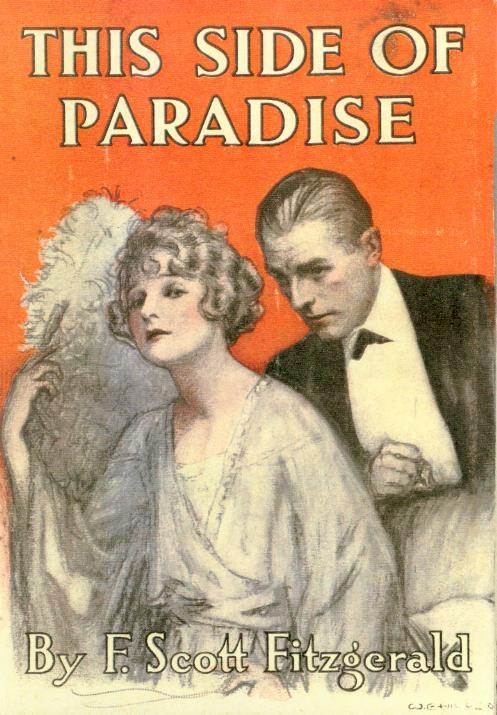
            I’m also reading a book called This Side of Paradise by F. Scott Fitzgerald. He is my favorite author, and this is one of my very favorite books. It’s a semi-autobiography about a boy named Amory Blaine (who represents F. Scott Fitzgerald). He grows up in Minnesota, just like Fitzgerald, and goes to boarding school in the northeast. After boarding school, he attends Princeton, just like Fitzgerald. It’s interesting because it is a fiction book, but it loosely depicts the life of Fitzgerald. I’ve often thought about writing one myself, mostly for my enjoyment in my later years. But this is also a discussion from my History and Memory class. How much of a semi-autobiography is embellished? How much of a regular autobiography is embellished? Is it deliberate, or is it simply the dreamlike state in which we remember things? These are all interesting perspectives on history, memory, and biography.

Image Information: This Side of Paradise by F. Scott Fitzgerald