Showing posts with label storytelling. Show all posts

Tuesday, November 11, 2014

Week 13 Storytelling

The two boys followed the man to the back porch and sat down. The temperature was unlike any they had ever felt; it was neither hot nor cold, but they were warmed and cooled.
It had grown dark, and the stars had come out in the sky. The boys had never seen so many lights before. As they admired the heavens, the old man began to speak.

“A long, long time ago – centuries before you grandfather’s great-great-great-grandfather was even born, a man came to my door. He was strikingly handsome, and he gave me the most peculiar feeling. His persona was refreshing, and I was compelled by his nature. His name was Rama, and he was lost. He asked me for directions to a home of one named Shiva. He said it was an emergency – and that it was urgent.

I, however, am not an urgent man. I speak slowly, but precisely, and I enjoy taking my time. I knew where Shiva lived, and I assured Rama that I would show him the way if he sat with me to have a drink. I poured him a glass of wine, and then another, and then another. And, as you may know, in vino veritas. The truth came spilling out of his mouth. He talked and talked, and he began to tell me of a friend of his, a wise monkey, who had warned his monkey-friends of a water-ogre and saved their lives. He told me of his wife and of her beauty. We laughed and got to know each other, and we became the closest of friends.

He said to me, ‘My friend, I feel as though I have known you for a thousand years. Please come with me to see my friend Shiva. I do believe that you would be friends.’ 
‘Of course I will come. I will show you the way. If you don’t mind me asking, why are you going to see your friend Shiva?’ 

Rama suddenly grew silent. ‘It seems as though I had forgotten my troubles in your presence. My spirits are lighter, but I must remember why I have come. I have sinned against gods and man.  Shiva is the One who is eternally pure, and he will purify me.’
‘For what do you need purification, my dear friend?’ I asked him. I couldn’t believe this man was capable of any sins.

‘I was with my brother and my wife when I saw a golden deer. It was truly beautiful. My wife, Sita, insisted that I pursue it and kill it. I hesitated, but I could not deny her. I chased it, killed it, and when I returned, she was gone. She was kidnapped by an enemy of mine, and I believe it is karma for killing an animal that meant me no harm.’

I sat and listened to him, enjoying another glass of wine, and assured him of his victory. We went to sleep, and in the morning, we travelled to Shiva’s home, where we were both purified.”
The boys had been listening to the old man with furrowed brows, not sure whether or not to believe him. They thanked him for the story, and he showed them to their room.

 Author's Note: I chose to use one of my storybook stories this week. I incorporated Rama into this story because I’ve enjoyed him so much in The Ramayana. It was perfect that Shiva lives on Mount Kailash, and it was perfect that there was a section within The Ramayana where Rama needed purification. Within my storybook, I hope to intertwine a few of the religions and give some different perspectives told to the hermit. I chose this particular picture because it captures Sita’s persuasion of Rama. He looks a little apprehensive, but you can tell that he really wants to please Sita. I also added within the story that Rama things Shiva and the hermit would be good friends – I was hoping to illuminate and draw attention to the possibility of the hermit being a god also. That’s why I give a lot of the qualities of the gods to him. Who knows, maybe he is one! I hope that the idea of purification resonated strongly with the reader, especially in relationship to the future stories. I want the mountain conveys many positive qualities that the gods represent within the Indian Epics. I think that the hermit’s persona is compelling to Rama, and it should convey a certain mantra that will resonate throughout the rest of the stories.


Image Information: The Wine List

Le Périgord

Here's a link to my storybook: The Hermit 

Monday, November 3, 2014

Week 12 Storytelling: The Two Kindergarteners

There were two young boys who became quick friends in Kindergarten. They were not normal boys; they were quirky. They played weird games. They liked cards and classic movies. They both wore glasses, and their classmates constantly called them “nerds”. They were surprisingly athletic, but no one really knew that because they spent all of their time studying, reading, or playing games with each other.

One boy was a few months older, and his name was John. The other boy was a few months younger, but had about fifty pounds on John (which is a lot in kindergarten). His name was Buzz.

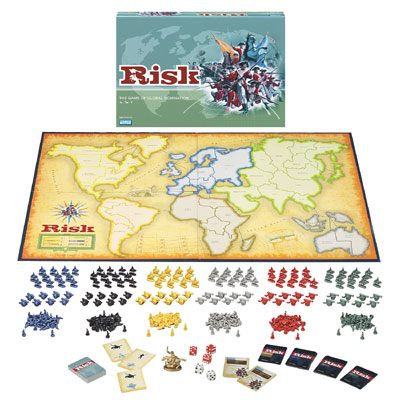
They went to each other’s houses almost every day after school. Their mothers would take turn picking them up from school, and they would play games like Risk or Settlers of Catan.

Buzz looked up to John, even though he was only a few months older. John kind of took Buzz under his wing and taught him a lot about life and how to not get picked on so much. Buzz was kind of the new kid. His parents had just moved them into town because of his dad’s new job at the factory down the street.

John’s dad was in the military, and you know what that means. Soon, it was time to pack up and move to another town with another military base in it. It wasn’t a sudden departure, but it sure felt like it to the boys.

The day finally came for John’s family to move. The boys cried, hugged, and told each other goodbye. They gave each other a letter. They each had to clean their glasses because the tears had smudged the backside of the lenses.

The days moved on, but the boys didn’t. Buzz sat at home, depressed, and he lost a lot of weight. He wouldn’t eat. Months passed, and he began to eat a little more, but his mother was still worried. The boys wrote letters to each other every day, but they were still sad.

The town that John moved to was 3 hours away, so the parents called each other. They decided that every other weekend they would drive halfway and let the boys spend the weekend together.

The boys’ attitudes began to cheer up, and life was better again.

Image Informaiton:
The Game of Risk
Source: On Violence


Author’s Note: This story is derived from the Jataka story called The Elephant and the Dog. The Elephant eats his food and gives his leftovers to the dog. Because they share food, they eat every meal together and become great friends. Soon, the dog is sold and the elephant becomes depressed. The elephant won't eat, bathe, or do anything productive. Then, the dog is bought back and the two live happily as friends.

Monday, October 27, 2014

Week 11 Storytelling: In Vitro

There once was a couple who lived in upstate New York. They were a sweet, kind couple, who desired to have a large family. They tried and tried and tried to have children, but alas, it was no use. They went to the doctor hoping to solve the problem. He was a renowned doctor, and they hoped greatly that he could help. The doctor gave them a few options. The first, which was surrogacy, the couple thought could work. However, they preferred to have a child with each other. After a long talk with the doctor, the couple went home. They slept on it, took some time to themselves, and spent their personal days contemplating each option that the doctor had given to them. They finally came to a decision.

They decided to try in vitro fertilization. They set the appointment date. The husband went in a few weeks early and did his business. They were so excited they could hardly take it. They decided not to tell anyone, including their immediate families, until they knew that the pregnancy had taken.

The day finally came, and the woman went in receive the treatment. She went into the doctor’s office and waited. She waited and waited, and finally the doctor came in. His face was grim, and she immediately could tell that something was wrong.

“What is the matter?” she brazenly demanded.

“Ma’am, bear with me – this has never happened here before. I’ve never even heard of this happening. Somehow, we mixed up your husband’s semen, and we impregnated another woman with it…”

The woman got up from her chair, left the room, and got in her car. She drove to the nearest coffee shop, ordered a latte, and sat in her car and cried.

But don’t worry; they ended up meeting the woman who was impregnated with the husband’s sperm. She had the baby and gave it to them, which was nice, especially since the in vitro didn’t work with the wife when they tried it later. The couple sued the in vitro office and won enough money to send 7 kids to college, and maybe even their grandkids too.


Image Information: Happy Family, Mommy and Daddy Kiss
Source: Urban Moms


Author’s note: I took a section out of Buck’s Mahabharata. This particular section tells the story of Uparichara having a wet dream and sending his semen to his wife. However, the hawk charged with its delivery dropped the semen in the water and impregnated a fish. A fisherman caught the fish and found a baby girl in its stomach. I decided to modernize the story to make it more realistic.


Bibliography: Buck, William. Mahabharata. Berkeley: U of California, 1973. Print.

Monday, October 13, 2014

Week 9 Storytelling: The Casino

James had a type-A personality. He was fierce, competitive, and hated losing more than anything in the world. He loved watches, cars, and anything that made him look more impressive to his friends than he actually was. It was Christmastime, and as James was driving home in his brand new BMW x5, he decided to stop by and spend a little bit of his Christmas bonus at the Riverwind Casino in Norman, Oklahoma.

He used to have a little gambling problem, but he was over that now. “I have more self control than ever,” he kept telling himself.

He entered into the casino and ordered a beer. He used to have a little drinking problem, but he was over that now. “I have more self control than ever,” he kept telling himself.

He tossed down ten one hundred dollar bills on the roulette table, and the man held each one up to the light. He gathered a thousand dollars worth of chips and slid them in front of James.

It was getting a little late, and he might be late for dinner with his family, “I’ll just play a couple of games,” he told himself.

He placed his chips, and increased his chip count. He won, and won, and won. After only an hour he had already obtained close to ten thousand dollars! However, he went on, late into the night, and finally he was invited upstairs with the owner of the casino.

They began to play blackjack.

James won at first, but then came the end of his hot streak.

He lost. Then, he lost again. Then, he lost another time, and another, and another. Finally, his ten thousand dollars worth of chips were gone. He placed his watch on the table.

“Double of nothing?” he asked.

He lost his watch.

Then, he placed his shoes, Then. he placed his blazer on the table. Then, he placed his car keys.

He lost everything.

He began to sweat. James was embarrassed, and he felt as though he had been stripped of his manhood.

He called his wife, who was asleep. It was 2:00 a.m. by now. She picked him up, brought him home, and they went to sleep without a word.


Author’s Note: I chose to retell the story of Yudhishthira’s game of dice in a more modern sense. I hoped to convey the danger of such a risky game. Also, I stopped at Riverwind yesterday on my way home from Dallas and lost 20 dollars playing roulette, so I thought it was fitting.


Image Information: 
Roulette Table
Source: Gallery Hip


Narayan, R. K. The Mahabharata. New Delhi: Vision, 1987. Print.

Monday, September 29, 2014

Week 7 Storytelling: The Festival

It was a summer night, one where it was neither hot nor cold, and Ben sad on his back porch. The breeze was blowing as he enjoyed his drink. It had been a long day, and his cocktail proved to lift his spirits.

Ben was a wealthy man, but he was also quite lonely. He reflected on his life – his recent separation with his wife Martha, and how she had taken their twelve-year-old twin sons with her to her mother’s house. He missed them a lot.

Suddenly, his face lit up. He summoned his personal assistant to the back porch, and said, “I want to have a party – a midsummer night party.”

“But midsummer is tomorrow, sir,” his assistant replied. “Don’t you think there would be a better response to the invitation if we planned the event a few weeks in advance?”

“Nonsense,” Ben replied. “I must do something to get my wife and kids back.”

Thus, the party was planned. It was to be the party of the year (and even possibly the party of the decade). He invited his entire family: his wife and kids, her mother and father and aunts and uncles and cousins, his immediate family, his first and second and even third cousins, and at last, every single employee from his company. Not only that, he invited his graduating class from high school, every member of his fraternity in college, every member of his wife’s sorority, and every friend he’d ever had on any type of social media. The party, dubbed “The Festival”, even made the newspapers. It was predicted to be “a modern day Gatsby party” by the New York Times.

Not a single person turned down the invitation.

The night of the party came. The food was unparalleled. There was a table for every country of the world, with homemade food from someone from each country. There were five bands that played, from classical music to reggae to funk, even swing music was played.

He got up to make a toast. “This ‘Festival’, as they call it, is a celebration of thanksgiving for what good fortune we have all had. It will be a long and excellent celebration – so eat, drink, and be merry, my friends – for life is too short to not be happy.”

A cheer erupted and Ben walked up to Martha. She embraced him, he apologized, and they agreed to work on their marriage. They lived happily ever after.


Image Information: House Party


Author’s Note: I took this story from an Buck’s portrayal of the Festival (on page 401). However, instead of Rama not inviting Sita, I let Ben invite his wife and children back (in order to make a happy ending).

Bibliography:
Buck, William. Ramayana:. Berkeley: U of California, 1976. Print.